


Introducing Our New Blog Series: The Grocery Store Squeeze 🛒
Have you noticed that your grocery cart seems to be getting more expensive, even when you're buying the same things? You're certainly not alone!
For American families, the rising cost of groceries has become more than just a frustration at the checkout counter. It's putting real pressure on household budgets and forcing many of us to rethink how we shop, cook, and spend.
At Movement Wealth Partners, we understand that financial wellness isn't just about saving for retirement or managing investments. It's also about making your hard-earned money stretch further in everyday life.
That's why we're introducing "The Grocery Store Squeeze," a new blog series dedicated to helping families navigate the rising cost of putting food on the table.
Throughout this series, we'll explore practical grocery shopping strategies, budget-friendly meal planning, ways to reduce food waste, smart shopping habits, and simple changes that can add up to meaningful savings over time.
Our goal isn't to tell you to stop buying the foods you love. It's to help you make informed decisions so you can spend less at the grocery store without feeling like you're sacrificing more.
Because when everyday expenses keep climbing, every dollar saved is a dollar that can go toward something else that matters to you and your family.
So grab your grocery list and follow along! We're kicking things off with "The Grocery Store Squeeze: Smart Ways American Families Can Save Money on Food."
Let's see how much we can save—one grocery trip at a time!
Stay tuned for more in our Grocery Store Squeeze series, and here is blog #1:
"The Grocery Store Squeeze: Smart Ways American Families Can Save Money on Food"
Remember when $100 at the grocery store could fill your cart with enough food to last most of the week? These days, that same $100 might barely cover a few bags.
For millions of American families, grocery shopping has become an exercise in financial strategy. From eggs and meat to fresh produce and pantry staples, higher food prices have changed the way households shop, cook, and budget.
And while inflation may slow, that doesn't necessarily mean grocery prices return to what they once were. For families already juggling mortgages, car payments, utilities, childcare, and retirement savings, the cost of putting food on the table can feel overwhelming.
The good news? You don't have to become an extreme couponer, give up your favorite meals, or spend hours comparing prices to make a meaningful difference in your grocery bill.
A few practical changes can help you take back control of your food budget, one shopping trip at a time.
1. Stop Shopping Without a Plan
We've all done it. You stop at the grocery store after work, you're hungry, you're tired, and suddenly everything looks good.
Before you know it, you've spent $175 and still aren't quite sure what you're making for dinner.
One of the simplest ways to reduce grocery spending is to plan your meals before entering the store.
Start by looking through your refrigerator, freezer, and pantry. What do you already have? What needs to be used before it spoils?
Then plan five to seven dinners around those ingredients, making a shopping list of only what you need.
Money-saving tip: Build your weekly menu around what's on sale rather than deciding what you want to eat and then paying whatever the store charges.
If chicken is on sale, make chicken tacos, grilled chicken, and chicken noodle soup that week. One ingredient can stretch across several meals.
2. Pay Attention to the Price Per Ounce, Not Just the Sticker Price
That big box of cereal might look like a bargain, but is it really?
Grocery stores often display a unit price on the shelf label, showing what an item costs per ounce, pound, or other measurement.
For example:
Brand-name cereal: $5.49 for 16 ounces — approximately 34 cents per ounce.
Store-brand cereal: $3.29 for 18 ounces — approximately 18 cents per ounce.
That's nearly half the cost per ounce for essentially the same breakfast.
This strategy works particularly well for cereal, pasta, rice, canned goods, cleaning products, and snacks.
Remember: Bigger packages aren't automatically better deals. Always compare unit prices, and only buy quantities your family will actually use.
3. Give Store Brands a Chance
Brand loyalty can be expensive.
Many grocery store private-label products offer comparable quality to national brands at a lower price.
Consider trying store-brand versions of pantry staples such as flour, sugar, canned vegetables, pasta, oatmeal, frozen vegetables, and dairy products.
You don't have to switch everything at once. Start with five products your family purchases regularly.
If each substitution saves just $1.50, that's $7.50 per shopping trip. Over 52 weekly trips, that adds up to $390.
Not bad for making a few changes to your shopping cart!
4. Make Your Freezer Your Financial Friend
Your freezer can be one of the most valuable money-saving tools in your kitchen.
When meat, poultry, bread, or frozen vegetables go on sale, consider buying extra if your budget and freezer space allow.
Divide larger packages of meat into meal-sized portions before freezing. Label each package with the contents and date.
You can also freeze leftovers for busy evenings when ordering takeout might otherwise be tempting.
Think about it: If having a prepared meal in the freezer prevents your family from ordering $50 worth of takeout just twice a month, that's potentially $1,200 saved over a year.
Bonus tip: Keep a list of what's in your freezer. Food you forget about isn't saving you money.
5. Stop Throwing Your Grocery Budget in the Trash
Food waste is one of the most overlooked household expenses.
How often have you discovered wilted lettuce, forgotten leftovers, or expired yogurt hiding in the back of the refrigerator?
Every item thrown away represents money that could have gone toward another financial goal.
Try creating an "Eat Me First" section in your refrigerator for food that needs to be used soon.
A few other ideas:
- Turn leftover roasted vegetables into soup or omelets.
- Use overripe bananas for muffins or banana bread.
- Freeze extra bread before it becomes stale.
- Designate one evening each week as a leftovers night.
- Buy fresh produce in quantities your household can realistically finish.
Reducing food waste doesn't just help the environment. It helps protect your wallet.
6. Use Grocery Store Apps and Loyalty Programs Strategically
Most major grocery chains offer free loyalty programs, digital coupons, personalized discounts, and weekly specials.
Taking five minutes to review these offers before shopping can produce worthwhile savings.
But here's the catch: A coupon only saves you money if you were going to buy the product anyway.
Saving $2 on a $7 snack you didn't need isn't saving $2. It's spending $5.
Focus on discounts for products already on your shopping list, and be careful not to let reward points or limited-time promotions encourage unnecessary purchases.
7. Rethink How Often You Eat Meat
Meat is often one of the most expensive parts of a grocery bill.
You don't have to eliminate it, but changing how you incorporate it into meals can make a noticeable difference.
Consider having one or two meatless dinners each week using affordable protein sources such as beans, lentils, eggs, or chickpeas.
Or stretch a pound of ground beef by adding beans to chili, tacos, or casseroles.
Instead of serving meat as the centerpiece of every dinner, try meals where it plays a supporting role, such as stir-fries, soups, pasta dishes, and rice bowls.
Small adjustments can help reduce costs while keeping meals satisfying and nutritious.
8. Set a Weekly Grocery Budget—and Actually Track It
It's difficult to control what you aren't measuring.
Start by reviewing your grocery spending over the past month. Include the quick trips for milk, snacks, or ingredients you forgot during your regular shopping trip.
You might be surprised by the total.
Once you know what you're spending, establish a realistic weekly target.
Don't set a budget so restrictive that your family can't maintain it. Instead, aim for a modest reduction and adjust as you learn what works.
Here's an example of how relatively small weekly savings can accumulate:
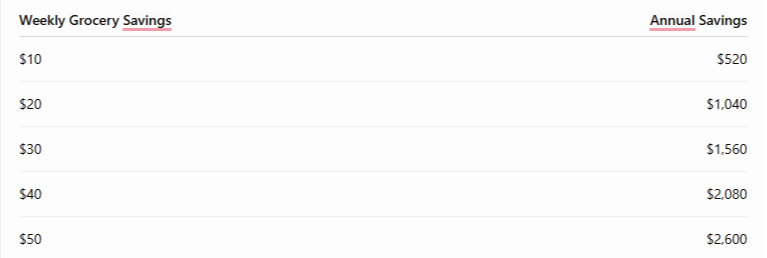
Imagine what an additional $1,560 or $2,600 each year could mean for your household!
That money could help strengthen your emergency fund, reduce credit card debt, contribute to retirement savings, or provide breathing room in your monthly budget.
9. Be Careful With the Convenience Trap
Pre-cut fruit, individually packaged snacks, shredded cheese, prepared meals, and single-serving products can be convenient, but that convenience often comes at a premium.
Consider buying a block of cheese instead of pre-shredded cheese, a larger container of yogurt instead of individual cups, or whole produce instead of pre-cut packages.
However, convenience isn't always the enemy.
If buying pre-cut vegetables means your family actually eats them rather than throwing away whole vegetables, the convenience may be worth the extra cost.
The goal isn't to eliminate convenience. It's to make intentional decisions about where you're willing to pay for it.
10. Don't Let a Sale Convince You to Overspend
There's something satisfying about seeing "BUY ONE, GET ONE FREE" or "LIMITED-TIME SPECIAL" on a grocery store sign.
But sales can create a false sense of urgency.
Before adding a promotional item to your cart, ask yourself three questions:
Would I purchase this if it weren't on sale?
Will my family use it before it expires?
Is it actually cheaper than the alternatives?
Stocking up can be smart, particularly for nonperishable items your household uses regularly. But purchasing things simply because they're discounted can work against your budget.
A good deal is only a good deal when it meets an actual need.
The Bigger Picture: Your Grocery Budget Is Part of Your Financial Plan
At Movement Wealth Partners, we often talk about the importance of having a financial plan that reflects your goals, priorities, and everyday life.
But financial planning isn't just about investments, retirement accounts, and the stock market.
It's also about the decisions you make every day.
Your grocery budget may seem like a small piece of your overall financial picture, but repeated spending decisions have a way of adding up.
Consider a family that finds ways to reduce its grocery spending by $35 per week.
Now imagine putting that money toward an emergency fund, paying down high-interest debt, or building additional retirement savings.
That's the power of being intentional with your money.
And here's something important to remember: Saving money doesn't always mean doing without. Sometimes it simply means doing things differently.
Start Small. Save Consistently. Make It Count.
You don't need to overhaul your entire grocery shopping routine tomorrow.
Start with two or three changes this week. Plan your meals. Compare unit prices. Try a store brand. Use what's already in your pantry.
Then pay attention to the results.
Because while we may not be able to control the prices on grocery store shelves, we can control many of the decisions we make when filling our carts.
And in today's economy, those decisions matter.
Let's Talk About Your Bigger Financial Picture
At Movement Wealth Partners, we believe financial confidence comes from having a plan—not just for the future, but for the financial challenges you face today.
Whether you're looking to improve your household budget, build your savings, prepare for retirement, or simply make your money work harder, our team is here to help.
Small savings today can help create greater financial flexibility tomorrow.
Contact Movement Wealth Partners to schedule a conversation about your financial goals and how we can help you plan for what matters most.
*This article is intended for general educational purposes and should not be considered individualized financial advice. Savings examples are hypothetical and actual results will vary depending on household circumstances and spending habits.